
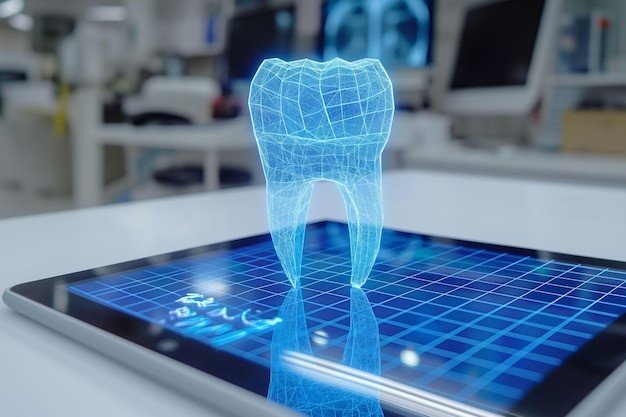
Digital dentistry is transforming the way dental treatments are diagnosed, planned and delivered. From digital scanning and smile planning to clear aligner and implant planning, modern technology allows dentists to create more detailed treatment plans while making the patient experience more comfortable and predictable.
At Prime Dentals, digital workflows are an important part of modern orthodontic, implant and restorative treatment planning.
What Is Digital Dentistry?
Digital dentistry refers to the use of modern digital technologies and computer-assisted workflows in dental diagnosis, treatment planning and patient care.
Instead of relying entirely on traditional physical impressions, manual measurements and conventional planning methods, dentists can use digital tools to create detailed records of a patient’s teeth and oral structures.
These technologies can be used across different areas of dentistry, including:
- Digital dental scanning
- Digital smile planning
- Clear aligner treatment planning
- Orthodontic treatment planning
- Implant planning
- Prosthetic planning
- Treatment monitoring
- Digital records and workflows
The goal is not simply to use technology for the sake of technology. The right digital workflow should help the dental team understand the case better and plan treatment more effectively.
Digital Scanning
One of the most useful technologies in modern dentistry is the intraoral scanner.
Traditional dental impressions involve placing impression material inside the patient’s mouth to create a physical model of the teeth.
Digital scanning uses an intraoral scanner to capture detailed images of the teeth and surrounding structures and convert them into a digital model.
Benefits of Digital Scanning
Digital scans can provide:
- Detailed digital records
- A more comfortable experience for many patients
- Easy digital storage of dental records
- Faster sharing of information within the treatment workflow
- A useful foundation for digital treatment planning
Digital scans can be particularly useful when planning orthodontic treatment, clear aligners, restorations and implant-supported solutions.
Digital Smile Planning
A smile is not just about straight teeth.
The shape, size, position and proportions of the teeth can all influence the overall appearance of a smile.
Digital smile planning allows the dental team to evaluate aesthetic considerations digitally before proceeding with appropriate cosmetic treatment.
Depending on the case, digital planning can help assess:
- Tooth proportions
- Tooth positioning
- Smile symmetry
- Dental alignment
- Overall smile aesthetics
- Relationship between the teeth and surrounding facial features
This can help create a more structured approach to cosmetic and restorative treatment planning.
Digital Planning for Clear Aligners
Clear aligner treatment requires careful planning because a series of controlled tooth movements is used to gradually improve dental alignment.
Digital scanning and treatment-planning software can help create a digital representation of the patient’s teeth.
The treatment can then be planned according to the desired orthodontic movement.
At Prime Dentals, the digital workflow can support the different stages of in-house clear aligner treatment, including:
Digital Scanning → Treatment Planning → Aligner Fabrication → Monitoring → Refinement → Retention
This allows the treatment journey to be managed through a connected digital workflow.
In-House Clear Aligners
One of Prime Dentals’ key areas is in-house clear aligner treatment.
Unlike a workflow where different stages are handled entirely outside the dental practice, an in-house approach can allow greater coordination between clinical treatment and digital planning.
The process may include:
1. Digital Scan
The patient’s teeth are digitally scanned to create a 3D representation.
2. Treatment Planning
The orthodontic requirements are evaluated and the planned tooth movements are digitally mapped.
3. Aligner Fabrication
The aligners are fabricated according to the approved treatment plan.
4. Treatment Monitoring
Progress is reviewed during the treatment journey.
5. Refinement
If additional adjustments are required, the treatment plan can be refined accordingly.
6. Retention
After active tooth movement is completed, retainers help maintain the achieved alignment.
Digital Implant Planning
Digital dentistry can also play an important role in dental implant treatment.
Before implant placement, the dentist needs to evaluate the available anatomy and determine an appropriate treatment approach.
Digital information can assist with:
- Evaluating the implant site
- Planning implant positioning
- Understanding the relationship between the implant and surrounding structures
- Coordinating implant placement with the final restoration
- Planning complex implant cases
The objective is to connect implant placement with the final prosthetic result, rather than treating the implant and replacement tooth as completely separate stages.
Digital Dentistry for Orthodontics
Digital technology can make orthodontic treatment planning more structured.
For patients considering braces or aligners, digital records can help the dental team evaluate:
- Crowded teeth
- Spaced teeth
- Tooth alignment
- Bite relationships
- Jaw and dental relationships
- Treatment progression
These digital records can also be useful for monitoring changes throughout treatment.
How Digital Dentistry Can Improve the Patient Experience
Technology can improve more than just the clinical workflow.
Greater Understanding
Digital images and visual treatment plans can make it easier for patients to understand their dental condition and proposed treatment.
Improved Communication
Digital records can help dentists explain treatment options in a more visual and understandable way.
More Comfortable Scanning
For many patients, digital scanning can be more comfortable than traditional impression procedures.
Better Treatment Coordination
Digital workflows can connect different stages of treatment, from diagnosis and planning to restoration and retention.
Is Digital Dentistry Better Than Traditional Dentistry?
Digital dentistry should not be viewed as a replacement for the dentist’s clinical expertise.
Technology is a tool.
A digital scan or treatment-planning system cannot independently determine the best treatment for every patient.
The dentist still needs to evaluate the patient’s clinical condition, understand the limitations of the technology and decide which treatment approach is appropriate.
The strongest digital workflow is therefore a combination of:
Clinical Expertise + Digital Technology + Personalised Treatment Planning
Digital Dentistry at Prime Dentals
At Prime Dentals, digital workflows support several of the clinic’s core treatment areas.
Orthodontic Braces
Treatment planning for children and adults requiring correction of crowded, spaced or misaligned teeth.
In-House Clear Aligners
Digital scanning, planning, fabrication, monitoring, refinement and retention through an integrated workflow.
Dental Implants
Digital planning can support single-tooth, multiple-tooth and comprehensive implant rehabilitation.
Digital Smile Planning
Technology-assisted planning for patients considering cosmetic and smile-enhancement treatments.
The Future of Modern Dentistry
Dentistry is becoming increasingly digital, but the purpose remains the same: to provide appropriate, personalised dental care for every patient.
As digital scanning, planning and treatment technologies continue to develop, they are becoming increasingly integrated into orthodontic, implant, cosmetic and restorative workflows.
At Prime Dentals, digital dentistry forms an important part of a modern approach to diagnosis and treatment planning.